

 2026-05-20
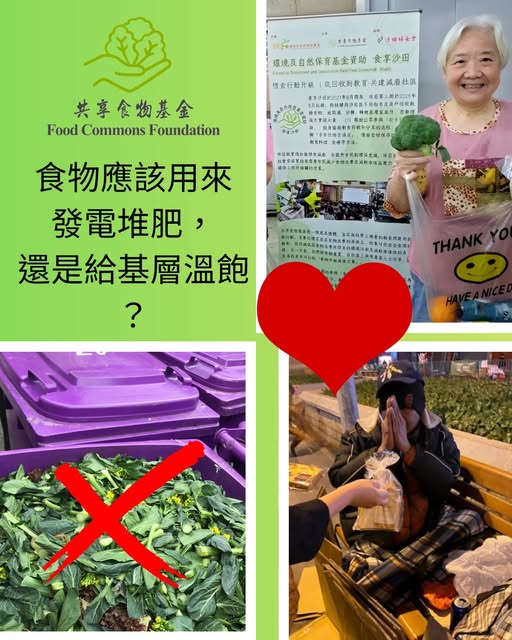
In recent years, Hong Kong has strongly supported food waste recycling. Many people believe that sending food to O·PARK for composting and energy generation is environmentally friendly enough. However, we want to say: these fresh, nutritious ingredients, often discarded due to market mismatches, have a place in many people's lives, not just leave the elderly and those destitute to weep.
During the recent annual event (April 2025 to March 2026), the Food Commons Foundation, together with its partners Sha Tin Women's Association and the Food Commons @District Volunteer Team, successfully rescued 143,996.84 kg of still edible quality food, including fruits and vegetables, bread, packaged food, and beverages, from markets, shops, and supermarkets. Almost all (99.68%) of this food was distributed that same evening to 231,930 underprivileged elderly, low-income families, sanitation workers, scavengers, and the homeless. Since its predecessor project in 2009, we have stored more than 11.46 million kilograms of food, benefiting more than 10.23 million people.
What did the invested resources yield in return?
1. Rejecting Resource Degradation: Sending fresh fruits and vegetables to power plants for composting is a huge waste. Maximizing the value of food—supporting those in need first—is the highest level of source waste reduction.
2. Transformation into Economic Support Equivalent to 290,000 Meals (SROI Social Return): Only the elderly and underprivileged in Hong Kong who can't receive vegetables truly feel the pain. These 144 tons of diverse food items, if compared to the most affordable two-course meal (approximately $30/meal) as a benchmark for the dietary value of the underprivileged, are equivalent to injecting a staggering HK$8.64 million in dietary support value into the community over the past year (nearly 290,000 meals)! Even after deducting all cooking and expenses, purely calculating based on the cost of ingredients for the most basic level of residents to buy and cook themselves, this still saves residents over HK$4.3 million in living expenses!
As Sister Lian herself mentioned in our latest promotional video (https://www.youtube.com/watch?v=y3KoxbIM9rI), she genuinely cried when she heard the project might be discontinued; these supplies are equivalent to over 50% of their elderly allowance in terms of substantive living support. Fresh vitamins and nutrition delivered eveningly have directly improved the health of 230,000 elderly individuals, giving them greater financial flexibility to live with dignity and reducing public healthcare expenditures at the source.
Many district food rescue projects have discontinued due to loss of funding, but with the support of the Environment and Conservation Fund, our "Food Commons @ Shatin" project has been extended to July 2027. We will continue to safeguard this compassionate district safety net.
If you are a corporate CSR leader who needs to implement advanced ESG and doesn't want to merely go through the motions, or a school member who needs Sustainable Development Goals (SDGs) education, please contact us to learn more about our paid food-saving workshops and market recycling experiences, and join us in supporting this endeavor.
Learn about cross-industry collaboration solutions: